
Contacts
Area Details
Stringtown WMA covers 4,000 acres of south-central Atoka County and is located 7 miles east of Stringtown on Greasy Bend road. Terrain within the WMA ranges from steep to moderately steep. Vegetation consists of oak-pine association. The average precipitation of the area is about 52 inches annually.
- Public Area Check-In: Non-residents must check in and out when accessing certain Oklahoma public hunting and fishing areas. There is no additional cost or limit on the number of check-ins.
- Deer Licenses: A 2 day waiting period applies to nonresident deer licenses purchased after the deer season has started. Licenses must be purchased at least 48 hours before hunting.
Closed Seasons
Same As Statewide Seasons
Seasons w/ Special Restrictions
- Deer Gun
Open the first nine days only.
- Quail, Snipe, Woodcock, Duck, Merganser and Coot, Rabbit, Squirrel, Pursuit with Hounds for Furbearers
Closed during the first nine days of deer gun season.
- Turkey Spring, Youth Turkey Spring
One-tom limit; seasons combined.
Hunter and angler camping is allowed in designated areas.
From Stringtown: At the intersection of U.S. Hwy 69 and State Hwy 43, 0.6 miles east to “Y” in the road, turn right onto Greasy Bend Rd, 7 miles east to WMA sign. Turn right into campgrounds.
- Quail: Bobwhite quail are present in fair numbers.
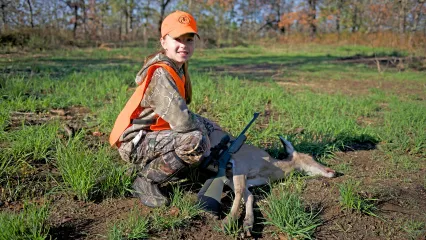
- Deer: White-tailed deer are present in good numbers but are highly sought after.
- Turkey: Eastern wild turkey are present in fair numbers but are highly sought after.
- Rabbit: Cottontails are present but not abundant.
- Furbearers: Coyote, bobcat and raccoon are available.
- Dove: Occur in small numbers for short periods during annual migration.
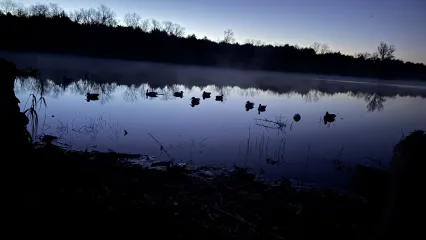
- Waterfowl: A few wood ducks can be found on Potapo Creek.
- Squirrel: Fox and gray squirrels are present in good numbers.
- Bald Eagle: Eagles winter on nearby McGee Creek Lake.
- Owls: Numerous species exist. The Screech owl is the most abundant.
- Nongame Birds: Numerous bird species exist, providing birders with ample watching opportunities.
Approximately 15 acres of wildlife habitat plots are maintained and planted annually. Habitat manipulations are approached annually by prescribed fire with three year rotational patterns of 750 acres.
One designated primitive camping area is offered on the area. Additional camping and cabin rental can be obtained through the McGee Creek State Park (580) 889-5822 while both lodging and restaurants are available in Atoka and McAlester. The Atoka City Hall can be reached at (580) 889-3341.
Very limited fishing opportunity exists for bass and sunfish in Patapo Creek. Fugate Lake (approx 10 acres or less) is a remote walk-in only fishing area with fair opportunities for bass, catfish and sunfish.
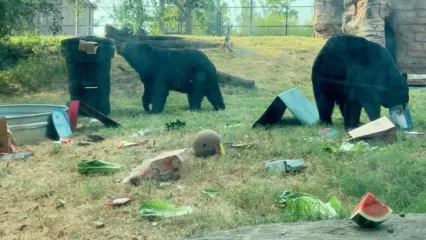
Get BearWise: Camp Lessons from OKC Zoo Bears
In September, Woody and Maynard, two American black bears at the Oklahoma City Zoo, demonstrated how quickly they could find food in an imitation campsite and offered a valuable lesson for coexisting with wildlife. When visiting or living in bear country, anything that might tempt a bear — from pet food or this week’s trash to a full-blown picnic — should be properly stored at campsites and other outdoor spaces.