
Contacts
Area Details
The Texoma/Washita Arm WMA covers 10,780 acres in southern Johnston County. The area is located southwest of Tishomingo. The area primarily consists of river bottom habitats with scattered agricultural fields.
- Public Area Check-In: Non-residents must check in and out when accessing certain Oklahoma public hunting and fishing areas. There is no additional cost or limit on the number of check-ins.
- Deer Licenses: A 2 day waiting period applies to nonresident deer licenses purchased after the deer season has started. Licenses must be purchased at least 48 hours before hunting.
Same As Statewide Seasons
Seasons w/ Special Restrictions
- Quail, Snipe, Woodcock, Rabbit, Squirrel, Predator/Furbearer Calling, Pursuit with Hounds for Furbearers
Closed during the first nine days of deer gun season.
- Turkey Fall Gun
Tom only, shotgun only.
- Trapping
Open to water sets, live box traps and enclosed trigger traps only.
- Turkey Spring, Youth Turkey Spring
One-tom limit; seasons combined.
Hunter and angler camping is allowed in designated areas.
The WMA lies along the Washita River and secondary drainages between the towns of Mannsville and Tishomingo. There are numerous access points accessible from highway 377 south of Tishomingo and highway 1 west of Tishomingo.
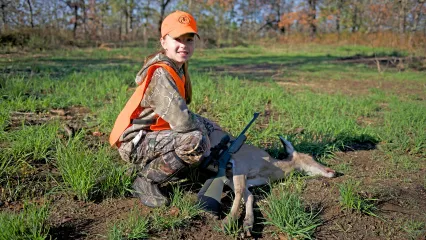
- Deer: White-tailed deer are present in good numbers but are heavily sought after.
- Turkey: Rio Grande wild turkeys are present in fair numbers but are heavily sought after.
- Rabbit: Both cottontail and swamp rabbits are present in fair numbers.
- Furbearers: Coyote, bobcat, and raccoon are available.
- Dove: Present in limited numbers.
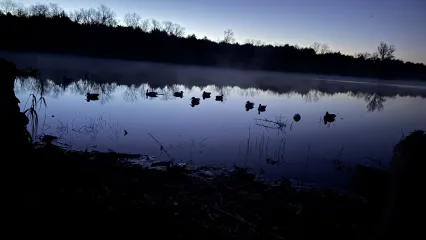
- Waterfowl: Ducks are usually present in good numbers but are heavily sought after.
- Bald Eagle: Eagles winter in all areas of the WMA.
Management efforts focus on extensive agricultural plantings, most of which are administered through agricultural leases. In addition, some small wildlife plots are planted annually. Prescribed burns are conducted when conditions permit.
Hunter and angler camping is allowed in two designated primitive camping areas offered on Texoma/Washita Arm WMA. Lodging and restaurants are available in the town of Tishomingo.
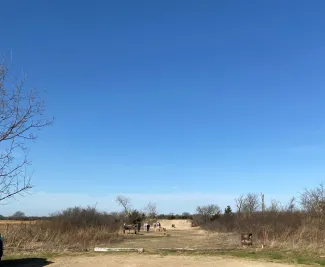
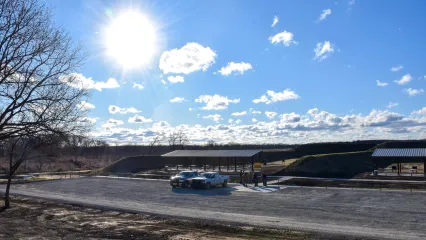
Features: A 100-yard shooting range with a shooting bench.
Range Coordinates: 34.215200, -96.705901
Driving Directions: From Madill, travel east on Main St out of town continuing onto US-377 N for 10.6 miles. Turn left onto N3540 Rd. After .2 miles the rifle range entrance will be on your left.
Be sure to review Department-Managed Area Rules on shooting ranges before use.
Fishing opportunities exist on the area’s many small ponds, lakes, and the Washita River. Lake Texoma is famous for its excellent striped bass fishery, with good opportunities for black bass, crappie and catfish species.