
Broken Bow WMA covers 5,420 acres in northern McCurtain County. Located adjacent to the Broken Bow Reservoir and the Ouachita National Forest (north and east of the town of Broken Bow), this WMA is a mixture of hardwood/pine and riparian forests. The riparian forest consists primarily of hardwoods, such as sweet and black gums, red maple and elms. The rugged terrain of the area with its old forests and the adjacent reservoir offer some of the most beautiful scenery in the state.
- Public Area Check-In: Non-residents must check in and out when accessing certain Oklahoma public hunting and fishing areas. There is no additional cost or limit on the number of check-ins.
- Deer Licenses: A 2 day waiting period applies to nonresident deer licenses purchased after the deer season has started. Licenses must be purchased at least 48 hours before hunting.
Closed Seasons
Same As Statewide Seasons
Seasons w/ Special Restrictions
- Quail, Snipe, Woodcock, Duck, Merganser and Coot, Rabbit, Squirrel, Pursuit with Hounds for Furbearers
Closed during the first nine days of deer gun season.
- Turkey Spring, Youth Turkey Spring
One-tom limit; seasons combined.
No camping allowed.
The majority of the WMA lies along the Broken Bow Reservoir, north and south of the McCurtain County Wilderness Area, and can be entered by hiking or by boat from the lake. Only a small portion of the WMA is accessible by road.
From Broken Bow: From U.S. Hwy 70, approximately 20 miles north on U.S. Hwy 259, turn east at the Mount Herman store, 8.5 miles on the Holly Creek Campground Road to the area.
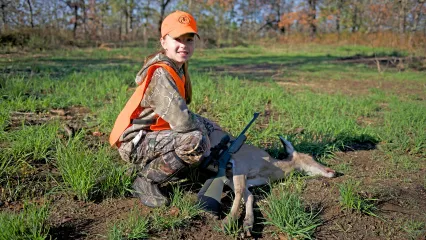
- Deer: White-tailed deer are present in fair numbers but are highly sought after.
- Turkey: Eastern wild turkeys are present in fair numbers but are highly sought after.
- Rabbit: Both cottontail and swamp rabbits are present in low numbers
- Furbearers: Coyote, bobcat and raccoon are available.
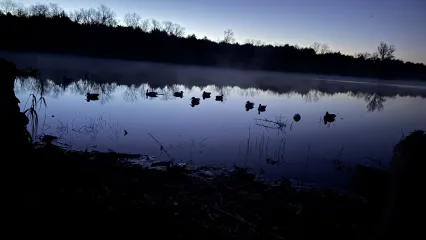
- Waterfowl: Migrating waterfowl and resident wood ducks occur infrequently on the reservoir.
- Bald Eagle: Eagles routinely winter on the Broken Bow Reservoir and Mountain Fork River.
Approximately 300 acres of the area is subjected to prescribe burning on a three year rotation. The remainder of the area is left to natural succession.
None on the area, but the Holly Creek Primitive Camping Area is adjacent.
Fishing opportunities are excellent on the Reservoir and in the Mountain Fork River. Primary river species include smallmouth bass and sunfish. Broken Bow Lake is known for its black bass fishing (largemouth, smallmouth, and spotted bass are all present). The lower Mountain Fork River designated trout area (below Broken Bow dam) offers year-round fishing for both rainbows and brown trout.
Kiamichi Country Tourism
1-800-722-8180
Broken Bow Chamber of Commerce
1134 W Martin Luther King Jr,
Broken Bow 74728
(580) 584-3393 or (800) 528-7337
chamber@pine-net.com
Oklahoma Tourism and Recreation Department
Post Office Box 52002
Oklahoma City, OK 73152-2002
(800) 652-6552 or (405) 521-2409
www.travelok.com