
Contacts
Area Details
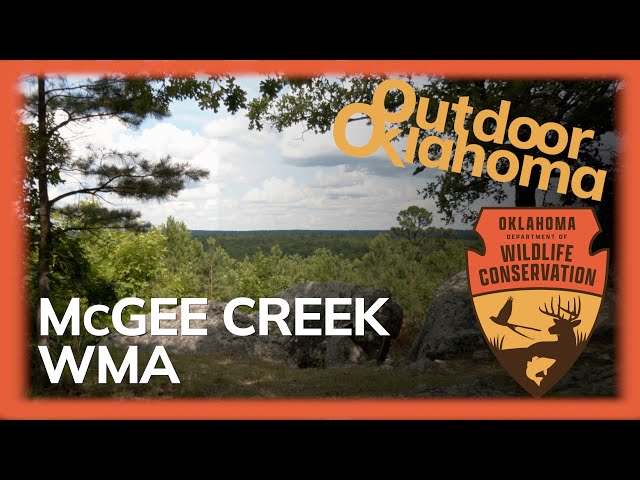
McGee Creek WMA covers 10,000 acres of southcentral Atoka County of the southeastern part of Oklahoma. Located 11 miles east of Stringtown on Greasy Bend road, terrain within the WMA ranges from steep to moderately steep. Vegetation consists of oak-pine association. The average precipitation of the area is about 52 inches annually.
- Public Area Check-In: Non-residents must check in and out when accessing certain Oklahoma public hunting and fishing areas. There is no additional cost or limit on the number of check-ins.
- Deer Licenses: A 2 day waiting period applies to nonresident deer licenses purchased after the deer season has started. Licenses must be purchased at least 48 hours before hunting.
Area closed to all activities for controlled deer and turkey hunts:
Nov. 20-22, 2026
Apr. 3-4, 2027
Closed Seasons
Same As Statewide Seasons
Seasons w/ Special Restrictions
- Quail
Closed during the first nine days of deer gun season.
- Rail, Gallinule, Crow, Snipe, Woodcock, Duck, Merganser and Coot, Rabbit, Squirrel
Closed from the opening day of deer archery season through the first nine days of deer gun season.
- Pursuit with Hounds for Furbearers, Predator/Furbearer Calling
Closed from the opening day of deer archery season through the first nine days of deer gun season and closed during spring turkey season.
- Trapping
Open to water sets, live box traps and enclosed trigger traps only.
- Turkey Spring, Youth Turkey Spring
One-tom limit; seasons combined.
Closed to all nonhunting activities, except hunter camping, from Oct. 1 - Jan. 31 and during spring turkey season.
Camping is allowed in designated areas.
From Stringtown: At the junction of U.S. Hwy 69 and State Hwy 43, go .06 miles east to “Y” and turn right, 11 miles on Greasy Bend Rd to sign, turn right, 1 mile to headquarters on Cane Break Rd.
- Quail: Bobwhite quail are present in low number.
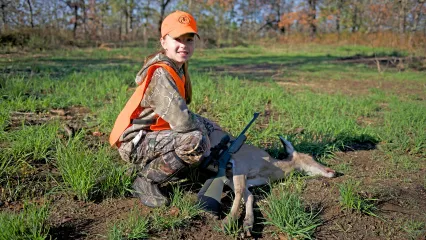
- Deer: White-tailed deer exist in good numbers but are highly sought after.
- Turkey: Eastern wild turkey are present in good numbers but are highly sought after.
- Rabbit: Cottontails are present in fair numbers.
- Furbearers: Coyote, bobcat and raccoon are available.
- Dove: Low numbers are present during annual migration.
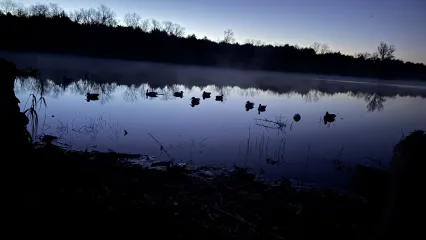
- Waterfowl: A few wood ducks and mallards can be found on McGee Creek Lake.
- Squirrel: Fox and gray squirrels are present in good numbers.
- Bald Eagle: Eagles winter on nearby Atoka and McGee Creek lakes.
- Owls: Numerous species exist. The Screech owl is the most abundant.
- Nongame Birds
Approximately 50 acres of wildlife habitat plots are maintained and planted annually. Each year approximately 1/3 of the area is controlled burned on a three-year rotation.
One designated primitive camping area is offered on the area. Additional camping and cabin rental can be obtained through the McGee Creek State Park (580) 889-5822 while both lodging and restaurants are available in Atoka and McAlester. The Atoka City Hall can be reached at (580) 889-3341.
Through stockings of Florida largemouth bass, McGee Creek lake is one of Oklahoma’s top lakes for springtime trophy bass. Catfish and crappie are also good at certain times throughout the year.
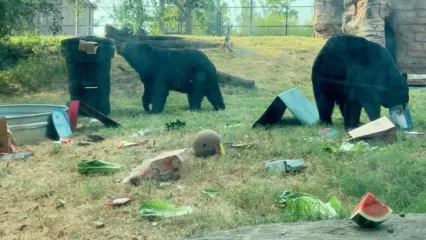
Get BearWise: Camp Lessons from OKC Zoo Bears
In September, Woody and Maynard, two American black bears at the Oklahoma City Zoo, demonstrated how quickly they could find food in an imitation campsite and offered a valuable lesson for coexisting with wildlife. When visiting or living in bear country, anything that might tempt a bear — from pet food or this week’s trash to a full-blown picnic — should be properly stored at campsites and other outdoor spaces.