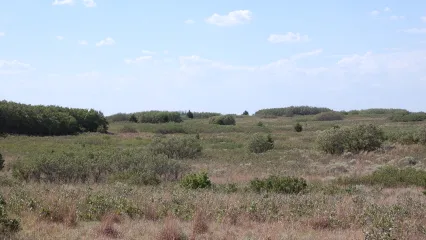
When you think of oak trees, images of massive branches, tree houses, and tire swings may come to mind. A three-foot oak tree is nothing to write home about, until you realize its presence in the western part of the state is a real plus for some of Oklahoma’s wildlife species. On the surface, the towering oaks of the east may appear "more" than shinnery oak, but a different story lies just below the ground. Shinnery is a clonal species, with an immense underground stem and root system that sends hundreds of shoots above the surface. Individual clones can range 10 – 75 yards in diameter and have an average lifespan of 11 to 15 years. The bulk of the remarkable root system runs parallel to the ground — just two to three feet below the surface — making this plant especially vulnerable to disturbances like plowing and root grubbing.
The low-growing habit makes shinnery a valuable wildlife plant, providing both food and cover. White-tailed deer, lesser prairie-chickens, and northern bobwhite forage on nourishing leaves and seasonally abundant buds, catkins, and acorns. Eleven species of rodents and at least six species of snakes are commonly found in shinnery and more than 142 species of birds have been recorded in Oklahoma’s shinnery communities. Many of these bird species forage on the insects hidden in the leaf litter. These insects are especially important during the breeding season when hens increase protein intake for egg development.
Shinnery also provides a critical wildlife habitat component — cover. Deer often bed in thickets and game birds can use shinnery to escape from aerial predators. For many game species, including northern bobwhite, woody cover is most beneficial when the dense canopy is three to four feet tall, the surface layer is relatively open, and individual thickets or “coverts” are close to each other. This arrangement protects birds from overhead predators, allows them to watch for ground predators while resting and digesting food, and increases the amount of space they can travel while searching for food.
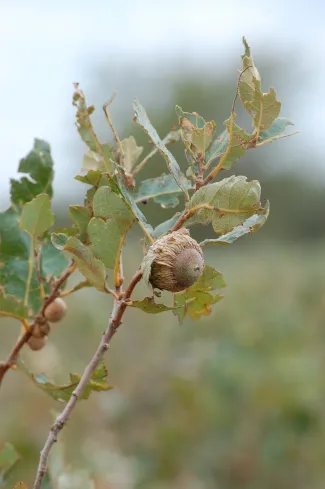
Shinnery oak — one of Oklahoma's shortest oaks — is a member of the white oak section and rarely exceeds four feet in height. Biologists believe uncharacteristically tall shinnery is the result of hybridization with post oak, and call hybrid thickets “motts.” In its most pure form, this shrub is only one to two feet tall, or “shin” high. (While the name aptly describes this shrub, “shin” is actually derived from the Louisiana French word chenière, meaning “oak grove.”) Shinnery is most commonly identified by its short-statured growth form. It can be distinguished from other western shrubs by its rough gray bark and deciduous leaves that have shallow lobes or indentations on the margin. When still on the shrub, half of the fruit, or acorn, is covered with a husk or “cap.” Buds begin to swell in late March, and shinnery flowers in April and May.
Prescribed fire is the most common management tool for reducing shinnery height. Under proper conditions, a fire can result in a one-to-two-year decrease in canopy, leading to a positive response of grasses and forbs. Even so, fire can stimulate oak resprout in the growing season after the burn. Dividing rangeland into three to four burn units allows for a variety of shrub heights and densities. This method ensures habitat requirements are met for both game and nongame species and increases usable space. Though effective, mechanical and chemical means of control are much more expensive and permanent – making predator avoidance more challenging and potentially reducing foraging opportunities.
Wildlife populations may not be limited by shinnery occurrence, but they are certainly attracted to the low-growing shrub with nutritious forage. With seasonally abundant foods — buds and catkins in the spring and acorns in the fall — and protection from predators and weather, shinnery is a wildlife plant for all seasons.