Find Opportunities Nocking on Oklahoma's Public Lands
Oklahoma offers some of the most diverse and rewarding public land opportunities in the United States. From the antelopes of the shortgrass prairie to the elusive black bears in the southeast, Oklahoma is a bowhunter’s paradise.
This article covers several aspects of archery hunting Oklahoma’s public lands including regulations, preferred habitats of a variety of big game, and specific archery techniques that put meat in the freezer and give you memories that last a lifetime. If you’re a bowhunter looking for your next public land hunting adventure, the information provided here will hopefully leave you informed and inspired.
An Archer’s Guide to Oklahoma’s Public Lands
Oklahoma boasts more than a million acres of public hunting land managed by the Oklahoma Department of Wildlife Conservation (ODWC). The primary objective for these lands is the sound management and use of Oklahoma's natural resources.
The Wildlife Department manages several categories of land, each with its own set of rules.
Wildlife Management Areas (WMAs)
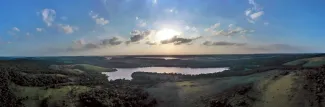
WMAs are a mainstay of wildlife management in Oklahoma. Often, they are comprised of smaller, more intensely managed units like game management areas (GMA), public hunting areas (PHA), wetland development units (WDU), wildlife management units (WMU), and waterfowl refuge portions (WRP).
Most are open to the public for hunting during statewide seasons, but some have restricted access during controlled hunts or are closed to specific hunting seasons. A comprehensive list of WMAs and their open seasons can be found at wildlifedepartment.com. There, you can filter the list by region, method or species. Another resource is the Oklahoma Fishing and Hunting Regulations guidebook available online or in print where licenses are sold.
An added bonus for archers: Several WMAs offer practice ranges with towers to simulate tree stand shooting. Atoka, Copan and Kaw have archery towers, and under construction are towers at Canton and Lexington.
Oklahoma Land Access Program (OLAP)
Oklahoma’s OLAP program provides a unique, and sometimes underutilized, opportunity for hunters to access privately owned land that has been leased by the Wildlife Department. Finding an OLAP property to hunt or fish starts with the OLAP map directory at wildlifedepartment.com. Zoom in and click on a boundary to see the access type, likely species present, type of cover or habitat, and total acreage of the property.
When visiting an OLAP property, it is important to understand OLAP functions differently than private land and Wildlife Management Areas. OLAP properties allow different types of access types, each with its own set of regulations and allowable activities. Here is a breakdown of a few access types.
Walk-in Hunting Area (archery or shotgun only)
The majority of properties enrolled in the OLAP are walk-in hunting areas open to archery or shotgun hunting (no buck shot or slugs). These properties are open to hunters with a land access permit for all hunting seasons besides elk season and are accessible Sept. 1 through May 16.
Limited Access
Limited access areas restrict the number of hunters that may access a property at a given time, which provides a better experience to hunters and property owners in high-traffic areas. To access, hunters must check in and out at GoOutdoorsOklahoma.com. These areas are open to all hunting seasons besides elk season and are accessible Sept. 1 through May 16. These areas are also limited to archery or shotgun hunting (no buck shot or slugs).
Antelope Controlled Hunt Access
These properties provide access for hunters drawn for antelope gun hunts through the controlled hunts applications. Bowhunters however, can get an over-the-counter antelope license and hunt any OLAP property west of State Highway 136.
Other access types that are not open to hunting include Walk-in Fishing Area, Walk-in Stream Area and Wildlife Viewing Area. A hunting or fishing license and an annual land access permit are required for all OLAP properties, unless exempt.
Public Land Regulations
WMAs can sometimes feel crowded, especially during opening weekends. However, archery hunting offers fewer crowds, a longer season and a hefty bag limit letting you put more meat in the freezer. But a hunter’s success, enjoyment and safety depend on everyone respecting the rules. The best resource for understanding various rules is the Oklahoma Fishing and Hunting regulations guidebook available online or in print wherever hunting or fishing licenses are sold. The following rules are not an exhaustive list, so be sure to review the regulations guidebook.
Hunter Orange
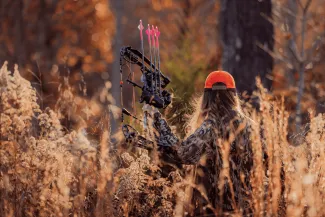
One of the most critical safety regulations for bowhunters is the hunter orange requirement. Archery season spans several months, and so it overlaps with several big game firearms seasons, which is when the hunter orange rules apply.
Bowhunters must wear either a hunter orange head covering or outer garment above the waist whenever a firearms season (muzzleloader or gun) is open. This also includes the youth gun season and the holiday antlerless season.
The rule also applies whether hunting on public or private land.
Camping
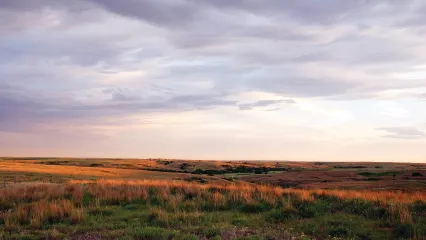
Many WMAs offer primitive camping. Though these campsites do not include restrooms, running water or electricity, they provide unique access to some of the state's most scenic landscapes.
- Designated Areas: Most WMAs restrict camping to specific designated areas rather than allowing it anywhere on the property.
- Hunters/Anglers Only: On WMAs where camping is allowed, it is often restricted to individuals possessing a valid hunting or fishing license.
- Time Limits: In areas where camping is permitted, the stay is typically limited to a maximum of 16 consecutive days.
Seasonal Restrictions: Some areas, like Cookson WMA or Packsaddle WMA, only allow camping during specific open hunting seasons.
Tree Stands
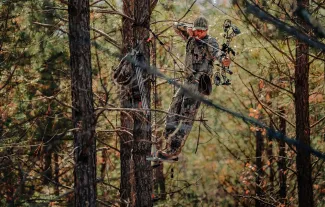
Tree stands provide bowhunters a significant advantage, especially on highly pressured WMAs. While the Department does allow the placing of tree stands on its public lands, tree stand owners should be aware that their stand does not give them exclusive hunting rights to that area.
Additionally, the use of tree stands is subject to specific regulations to protect resources and ensure fair access for all hunters.
Rules include:
- All tree stands must be portable.
- The use of any device that pierces the bark of a tree, such as screw-in steps, spikes or bolts, is strictly prohibited.
- Tree stands must be clearly marked with the hunter's name and address or their ODWC customer identification number.
- Stands may be placed on a WMA no more than 14 days before the opening of the relevant hunting season. And stands must be removed from the WMA within 14 days after the close of the season.
Deer
In Oklahoma, bowhunters have access to more than 100 public areas open to archery deer hunting. The vast majority of those areas are open during the statewide season Oct. 1 through Jan. 15, giving hunters 107 days of hunting. That is slightly more than 35 percent of a full calendar year!
Two species of deer are found in Oklahoma: white-tailed deer and mule deer. While white-tailed deer are common statewide and thrive in Oklahoma's forests and fields, mule deer are specialized residents of the wide-open prairies and rugged mesas of western Oklahoma.
The statewide archery season limit is six deer. No more than two may be antlered.
White-tailed Deer
A primary challenge for any public land hunters is deciding where to hunt. This is especially true for white-tailed deer which are found statewide. Good white-tailed deer hunting can be found at just about any WMA for those willing to put in the time. WMAs with relatively high deer harvest specifically for the archery season include Fort Gibson, Waurika, Keystone, Cross Timbers and Oologah.
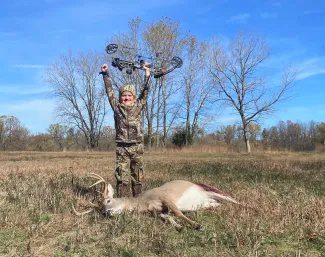
Canton WMA is a great choice for hunters looking for options relatively close to Oklahoma City. This WMA is less than 100 miles northwest of Oklahoma City and has a lot to offer bowhunters. It surrounds the majority of Canton Lake and provides densely vegetated bottomland habitat. A recently renovated archery range and tower provide hunters a place to practice. Primitive camping is available at designated areas along access roads on the area. Additionally, the U.S. Army Corps of Engineers manages developed campgrounds with RV hookups around the lake.
Although it has its challenges, Black Kettle WMA is a great place for spot-and-stalk archery or those looking to explore Oklahoma’s western landscape. More than 100 scattered units of rolling hills, shinnery oak and red-dirt canyons comprise the WMA’s unique topography.
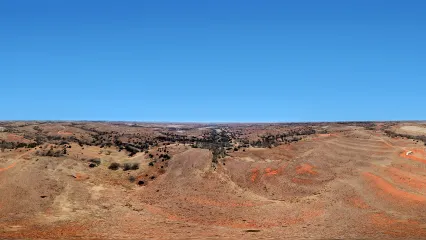
At 30,710 acres, it is the second-largest WMA in southwestern Oklahoma behind Sandy Sanders WMA. Black Kettle WMA is contained in the Black Kettle National Grassland and is one of Oklahoma's most popular public hunting areas. Although this can mean large crowds during opening weekend of gun season, bowhunters often feel like they have the whole place to themselves. But be warned: Archery hunting on this WMA has its challenges and can be physically demanding. A successful hunt requires a lot of planning and scouting.
Mule Deer
When bowhunters think of Oklahoma hunting, images of dense oak forest, thick river bottoms and white-tailed deer typically come to mind. However, the state’s far western horizon paints an entirely different picture.
In the Oklahoma Panhandle, among rocky mesas and scrubby junipers, lives the mule deer. This close relative of the white-tailed deer is unfamiliar to most Oklahomans, but in the western part of the United States, it is a familiar sight.
Although ODWC manages several WMAs where mule deer can be found, populations are localized so hunters must be prepared to log many miles.
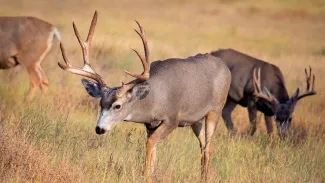
Most public land mule deer are harvested from Beaver River WMA in Beaver County. This property spans over 28,000 acres and is comprised of sand sage grasslands, rolling sandhills and scattered sand plum thickets.
Conquering these wide-open spaces requires a dramatic shift in strategy from traditional whitetail hunting. Many hunters rely heavily on the spot-and-stalk method. And because the cover is sparse and shot distances frequently stretch well past 40 yards, archers must be exceptionally proficient at extended ranges and well-practiced in shooting from kneeling or awkward positions.
And while mule deer hunting in western Oklahoma has been kept relatively secret, its popularity has grown over the years. Additional public lands for bowhunters to consider include Ellis County, Rita Blanca and Optima WMAs.
Study Ongoing
For several years, ODWC has been conducting research focusing on the health of the state’s mule deer. The effort includes netting and electronically tagging does and collecting biological samples.
The data collected will help Wildlife Department biologists better understand how mule deer use the habitat and factors determining their distribution and abundance to ensure proper management.
Black Bear
The presence of black bear in Oklahoma is a reminder that this state provides some of the most diverse habitat in the country. The fact that people have a chance to see and hunt black bear in the wild adds to the reasons why Oklahoma really is among the best places to live and hunt.
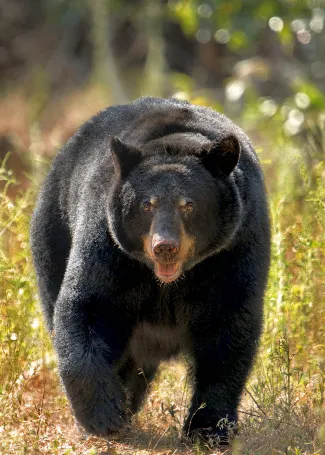
Southeastern Oklahoma’s Ouachita Mountains host a thriving bear population. Each year, hunters typically harvest about 80 bear during archery and muzzleloader seasons. Most bear are harvested in Le Flore County, which includes parts of the Ouachita, Winding Stair and Kiamichi mountains. Popular WMAs in the heart of bear country include Ouachita-Le Flore Unit, Honobia Creek, Three Rivers, Ouachita-McCurtain Unit and Pine Creek WMAs.
Unlike private land, baiting is prohibited on WMAs. Hunters are only allowed to hunt over natural food sources. And so, spot-and-stalk may be a good strategy, especially if natural food sources are plentiful. However, a bear’s preferred habitat of rugged, pine-covered hills and hardwood draws makes this strategy a physically demanding challenge for bowhunters.
Another option is to locate an area with fresh bear sign and stay there. Be prepared to sit there all day or continue to hunt that spot across several days. Bears will return to whatever food source is helping them gain the most weight, and on public land, that is usually acorns from white oaks.
Bowhunters wanting to pursue black bear must purchase a bear archery license before the season starts, unless they have a lifetime license. Bear archery season runs from Oct. 1 through the third Sunday in October.
A hunter’s combined season limit for archery and muzzleloader season is one bear.
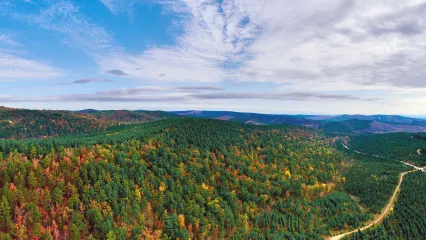
Totaling nearly 185,000 acres, Three Rivers WMA in southeastern Oklahoma is the second-largest WMA in the state, second to Ouachita WMA. It is the premier destination for hunters wanting to pursue deer and black bear in a single trip. It is a wilderness of managed timber, pine plantations and hardwood corridors. Because of its size, you can truly get away from other hunters. To help cover the cost of leasing this land, a annual Land Access Permit is required to access the area.
Antelope
Antelope offer the most challenging archery hunt in the state. Getting within range without being spotted is an exercise in extreme patience as they can detect movement up to four miles away. Antelope are skittish and quick to react. At the sound of a bowstring, they can drop their chest toward the ground to begin a sprint almost instantly, causing an arrow to sail right over their back. Known for their speed, they can sprint as fast as 60 miles per hour, making them the fastest land animals in North America.
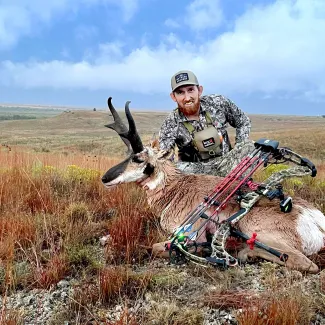
Hunters interested in archery hunting for antelope on public land can try their luck at the 15,000-acre Rita Blanca WMA or at more than 50 OLAP properties scattered across Cimarron and Texas counties. Each property averages about 400 acres. Hunters pursuing antelope on OLAP properties don’t need to have written landowner permission, but they do need a Land Access Permit.
Located in the extreme corner of Oklahoma's Panhandle, Rita Blanca WMA is scattered into 46 units over 26 miles and more than 15,000 acres along the Oklahoma-Texas border. The land here is dry. The average annual precipitation for the area is just about 18 inches (compare that to 56 inches in the southeastern part of the state). And while these conditions are too harsh for most species, antelope do quite well here.
Waterhole blinds are the most successful archery tactic. Locate an isolated stock tank or water source with fresh antelope tracks, set up a blind and wait. Antelope are creatures of habit and will often get water during the heat of the day.
Another tactic is to use a 2D or 3D antelope buck decoy that could potentially trigger a territorial response. A nearby buck may charge the decoy, moving from 400 yards away to 40 yards in seconds.
The most difficult strategy is spot-and-stalk. This requires hours of glassing and hundreds of yards of crawling across prairie. Some hunters will use a cow-shaped silhouette decoy to allow them to walk diagonally across open ground toward a herd without spooking them.
The antelope archery season runs from Oct. 1-14. The combined season limit is two. No more than one may be a buck.
Conclusion
Archery hunting in Oklahoma is a test of perseverance, knowledge and respect for the resource. Whether you are going after an antelope in the wide-open spaces of the Panhandle, or climbing a blackjack oak in the central plains, the opportunities on public land are plentiful for those willing to do the work.
- Use digital scouting tools like ODWC’s digital atlas, OnX or HuntStand to look for places where the terrain (like a cliff or a river) forces deer into a narrow path. In the southeast, look for pinch points between clearcuts.
- Be ready to move to your Plan B or Plan C spot.
- Communication with other hunters can sometimes turn a crowded area into a coordinated effort to move game toward each other.
- Be ready for a physical hunt. Dragging a buck out of a creek bed can be grueling, especially on a warm October day.
- Hunting public land is an investment of time. Be willing to travel, depending on your location. Only a few WMAs are less than a two-hour drive from Oklahoma City, while at least a half-dozen are about an hour’s drive from Tulsa.