Opening day of dove season is one of Oklahoma’s most anticipated hunting days each year — and for good reason. It marks the beginning of hunting season, offers an opportunity to hunt alone or with friends and family, and provides the perfect setting to introduce someone new to this lifelong sport. Plus, dove makes delicious table fare.
Hunters can find dove in every county across the state. If you don’t have access to private land, don’t let that keep you from enjoying a dove hunt. Oklahoma offers more than a million acres of public hunting land available to licensed hunters.
Many of these opportunities can be found on wildlife management areas (WMAs) managed by the Oklahoma Department of Wildlife Conservation (ODWC). ODWC offers maps, season dates, species information and other resources to help plan your hunt.
Whether you're a first-time hunter or a seasoned wing shooter looking to explore new areas, Oklahoma’s public hunting lands offer excellent opportunities to pursue dove throughout the season. Keep reading to learn how to make the most of ODWC-managed lands and improve your chances for a successful hunt.
Meet Oklahoma's Three Dove Species
Before heading afield, it's helpful to know which dove species you may encounter. Oklahoma is home to three species of doves, each with distinct characteristics and habits.
Mourning Dove
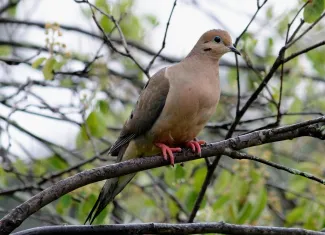
This is the most common and abundant dove species in Oklahoma. It is also the smallest of the three species. Recognizable by its slender build and grayish-brown plumage, the mourning dove can be found throughout Oklahoma.
These birds are especially attracted to agricultural areas where seeds and grains are plentiful. Sunflower fields are among their favorite feeding locations. Mourning doves are often seen perched on utility lines and may roost in bare trees when available. During the late afternoon and evening, hunters can frequently find them visiting ponds, stock tanks and ditches to drink before heading to their nighttime roots.
White-winged Dove
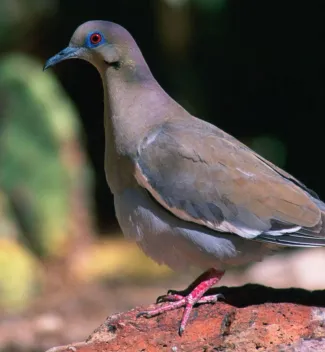
The white-winged dove is slightly larger than the mourning dove and is easily identified by the bold white stripe visible across each wing, especially in flight.
Historically found primarily in Texas and Mexico, white-winged doves have expanded their range northward into Oklahoma and neighboring states. They are highly adaptable birds and can be found in a variety of habitats, including agricultural fields, suburban neighborhoods, urban areas, and even more arid environments. Their ability to thrive in diverse settings has contributed to their growing presence across the region.
Eurasian Collared-Dove
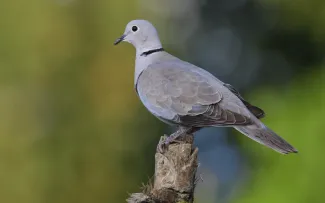
The Eurasian collared dove is the largest of Oklahoma's three dove species. It is easily recognized by the distinctive black crescent-shaped collar on the back of its neck, which gives the species its name.
Unlike the mourning dove and white-winged dove, the Eurasian collared-dove is not native to the lower 48 states. In Oklahoma, it occupies many of the same habitats as other dove species but is particularly comfortable around people. Eurasian collared doves frequently nest on buildings, utility structures and other manmade features in urban and suburban areas.
Essential Regulations and Safety
Following hunting regulations helps conserve Oklahoma's wildlife resources while ensuring a safe and enjoyable experience for everyone in the field. Before your hunt, review the current Oklahoma Fishing and Hunting Regulations for the most up-to-date information.
Key Regulations to Know
Season Dates
Dove hunting season runs Sept. 1-Oct. 31 and Dec. 1-29, 2026, statewide.
Always consult the current regulations booklet for exact season dates and any area-specific restrictions.
Daily Bag Limits
Hunters may harvest 15 doves daily in any combination of mourning, white-winged and fully dressed Eurasian collared-dove. But there is no daily limit for Eurasian collared dove if the head and a fully feathered wing remain attached to the carcass. These limits were in place at the time of this writing, so be sure to check the current regulations booklet for any changes that might have occurred.
Legal Methods of Take
Doves may be hunted with shotguns (conventional or muzzle loading), archery equipment, legal raptors, and other methods authorized under Oklahoma's general hunting regulations. Shotguns must be plugged so they cannot hold more than three shells in total, one in the chamber and two in the magazine.
License Requirements
Resident and nonresident hunters aged 18 and older must possess a valid Oklahoma hunting license unless exempt by law. Hunters 18-63 years old must also obtain a Harvest Information Program (HIP) permit before hunting dove.
Public Land Permits
Some public hunting opportunities, including certain Oklahoma Land Access Program (OLAP) properties, require a separate permit. These permits provide access to hundreds of thousands of additional acres of quality hunting land across the state. Any nonresident hunting dove on a WMA must possess a game bird permit and check in and out of the area through ODWC’s online system.
Pro-Hunter Tips for Success
Practice Before Opening Day
Dove hunting is one of the most challenging wing-shooting sports, and success comes with practice. Spend time at a shooting range before the season opens to become familiar with your shotgun, ammunition and shooting style. The more comfortable you are with your equipment, the more enjoyable your hunt will be.
Scout Your Hunting Area
A little preseason scouting can make a big difference. Visit your hunting location before opening day to identify feeding areas, water sources, flight paths, and potential shooting locations. Pay attention to where birds are entering and leaving fields. The more homework you do beforehand, the better your chances of success.
Bring the Right Gear
Beyond your shotgun and ammunition, a few simple items can make your hunt much more comfortable.
Consider bringing:
- A lightweight folding chair.
- Plenty of drinking water.
- Insect repellent.
- Eye and ear protection.
- Snacks.
- Extra shotgun shells.
Comfortable hunters tend to stay in the field longer and enjoy the experience more.
Know the Regulations
Not all WMAs have the same rules. Some WMAs prohibit the use of lead shot, while others may have special season dates or area-specific restrictions. Taking a few minutes to review the regulations before your hunt can prevent costly mistakes and help ensure a successful day afield.
Where to Dove Hunt
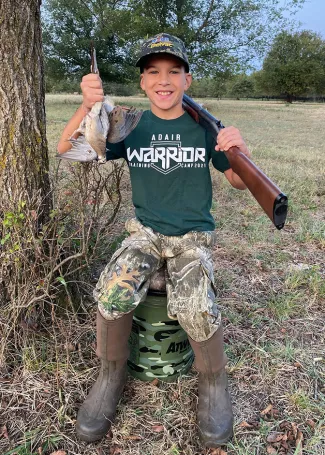
The most productive areas to scout and hunt for dove are found near agriculture fields such as recently harvested grain fields. Water is also a prime place to hunt. Cattle watering ponds (stock tanks) can be very productive in the last few hours of legal shooting time.
Each fall, ODWC posts a list and maps of all the WMAs that planted food plots and manage for dove.
Recommended WMAs for Dove Hunting
While dove can be found on many WMAs across Oklahoma, the following WMAs consistently provide quality habitat and hunting opportunities. As with any migratory game bird, hunting success can vary from year to year depending on weather conditions, rainfall, crop production and migration patterns.
Eastern Oklahoma
Hunters in the Tulsa area have several excellent public-land options within a relatively short drive. Keystone WMA and Skiatook WMA are both less than an hour’s drive from Tulsa and offer good dove hunting opportunities around agricultural fields, native grasslands and shoreline habitats.
For those willing to travel a little farther, Copan WMA, Fort Gibson WMA and Candy Creek WMA can also provide productive hunting. These areas benefit from a combination of food plots, agricultural fields and water sources that attract dove throughout the season.
Southwestern Oklahoma
Hackberry Flat WMA has earned a strong reputation among Oklahoma dove hunters. Located within an important migratory bird corridor, the area regularly attracts large numbers of doves during the fall migration. Its extensive wetland and upland habitats make it a destination worth considering for hunters seeking a memorable public-land dove hunt. The area is also conveniently located within an hour’s drive of Lawton. Sandy Sanders WMA is a little further west but might be well worth the drive.
Northwestern Oklahoma
Beaver River WMA and Cooper WMA are often recognized for their quail hunting opportunities, but they also provide quality dove habitat. The combination of small ponds, bare shorelines, native vegetation and agricultural areas create favorable conditions for feeding and watering dove throughout the season.
North-Central Oklahoma
Kaw WMA, near Ponca City, can offer excellent opportunities for migratory birds including doves. Farther south, John Dahl WMA has been a consistent producer for dove hunters and is worth scouting before the season opens.
Management Practices
Although every WMA may have dove using them, ODWC has a few management areas that work especially hard to attract dove to their WMA. The staff do this by planting food plots and crops as well as conducting controlled burns that will entice the dove to stay in their area. This provides easy food and water along with roosting area for the dove. Providing ponds for easy access to water is essential for their habitat. All these efforts will enhance your hunting experience.
Before You Go
WMAs may have regulations that differ from statewide hunting rules. Some WMAs have special season dates, shooting-hour restrictions, ammunition requirements, or area-specific closures. Before your hunt, always review the current Oklahoma Fishing and Hunting Regulations and any posted WMA-specific rules to ensure a safe, legal and enjoyable experience afield.