
Description
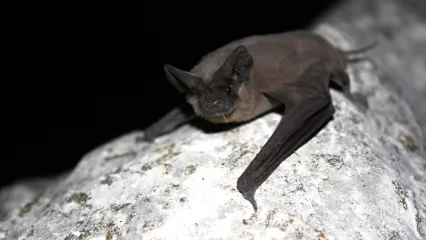
The northern hoary bat is a relatively large, migratory species of bat. Its name "hoary" refers to its frosted or grizzled fur marked by the white tips of fur that sit on the blackish-brown coat of its body. Standing out from its soft, dark brown fur is a remarkable yellowish-brown collar around its face and white patches of fur on its shoulders and wrists.
Size
These bats have a wingspan of 13–16 inches and a total length of 5–6 inches.
Habitat
Northern hoary bats are the most widely distributed bat species in the Americas, with a range spanning from southeastern Canada to Hawaii. The bats tend to stay within forests, woodlands, and the edge of clearings where they roost. They prefer a daytime roost in trees and take flight in late evenings.
Life Cycle
Resembling a dry leaf in a tree, this species will hang from one foot and wrap itself up in its own furry tail for a cozy bundled position. Its strong, narrow wings help the bat to reach flight speeds up to 13 miles per hour and soaring up into the sky as high as 8,000 feet above the ground. This is especially needed for their lengthy migrations during fall and spring as they only stop to hunt at night for insects such as moths and mosquitoes and, sometimes, other bats that are at treetop level. Leading solitary lives, northern hoary bats emerge from their hidden spots within the tree leaves to mate during the fall season. Females may fly to the north-eastern and central parts of the United States to give birth to bat pups (often twins, a rarity in bat species) in May to July. Males may be found more often in the western, mountainous areas.
How To Observe
Many find it difficult to spot these mysterious and not so social creatures. They spend most of the daylight hours tucked away in tree foliage and seldom venture out. Listen closely for a chattering sound in the night sky or take a small peek into the trees and you just might be lucky enough to find one! Find more information in the Wildlife Department's "Bats of Oklahoma Field Guide."